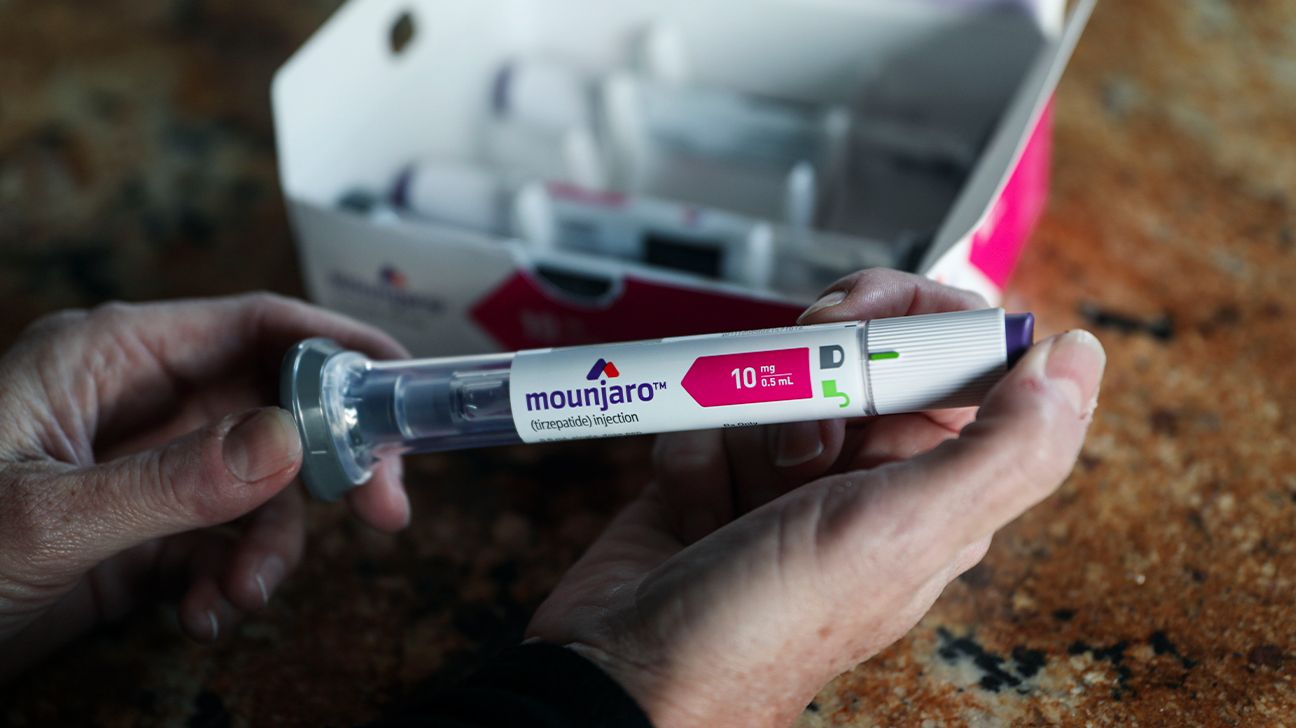
is mounjaro stronger than semaglutide Ozempic vs. Wegovy vs. Mounjaro: What's the Difference?
Marsoni
M251S
Get it in 3 business days with 1 day shipping.
Friday, May 29
Ohio to end GLP 1 drug weight loss coverage for state workers Glucagon Like Peptide 1 Receptor Agonists for Treatment of Nonalcoholic Fatty Liver Disease and Nonalcoholic Steatohepatitis: An Updated Meta Analysis of Randomized Controlled Trials Semaglutide 2.4 mg New Weight Loss Medication Preview Persistent Bad Breath? Real Causes Beyond Brushing Buckhead Clinic Atlanta, GA Ozempic Nausea Relief: Top Tips to Settle Your Stomach
Quick Dispatch:
Your is mounjaro stronger than semaglutide Ozempic vs. Wegovy vs. Mounjaro: What's the Difference? orders ship within 1-2 business days.
Delivery Options:
- Standard: 3-7 business days
- Fast: 2-3 business days
- Express: 1-2 business days
Order Tracking:
You'll receive a tracking link by email once your is mounjaro stronger than semaglutide Ozempic vs. Wegovy vs. Mounjaro: What's the Difference? ships.
Need Help?
Questions about is mounjaro stronger than semaglutide Ozempic vs. Wegovy vs. Mounjaro: What's the Difference?, sizing, or delivery? We're just an email away.
Live Shipping Estimates:
Enter your location at checkout to see available shipping methods and costs for is mounjaro stronger than semaglutide Ozempic vs. Wegovy vs. Mounjaro: What's the Difference? in your area.
Get Shipping Estimates
Exchange/Return Notes
- We offer a 30-day return/exchange service after receiving.
- Final sale items are not eligible for returns or exchanges.
- To process your return/exchange, please contact us at [email protected]
- Please click here for more details>>> Return & Exchange Policy
You may also like
4.0 ★★★★★
Based on 1023 reviews
Sort
Product Reviews
★★★★★ 5
Best book on the subject
Format: Paperback
Short yet concise argument for ending wars.
WAS THIS REVIEW HELPFUL?YesReportShare
Reviewed in the United States on August 31, 2022
★★★★★ 5
A must learn
Format: Paperback
Too important to be forgitten
WAS THIS REVIEW HELPFUL?YesReportShare
Reviewed in the United States on July 14, 2019
★★★★★ 5
It's How Wars End That Become Important Afterward
Format: Paperback
The twentiety century taught us a lot about wars and how they end. World War I showed us that making strong demands on the defeated (who didn't admit defeat to their own people) set the stage for the next big war.
World War II was fought until the Unconditional Surrender of the Germans and Japanese. Something that thinkers still debate as having made them fight all that harder.
VietNam was fought with no clear end in sight, and "another VietNam" entered our language.
The first Gulf War was ended when Colin Powell and Bush II debated how to end the war. They stopped before they had to go in and see what the Sunni's, Shiite's and Kurds made of the power vacuum left by the removal of Saddam would have created. Bush II is learning about this now.
This is the second revised edition of this book, originally published in 1971 and then updated in 1991 and now 2005 to reflect happenings in new wars.
Still some of the old wars had interesting insights that I didn't know before, such as how Finland, originally on Germany's side against Russia, made a peace with Russia and kicked the Germans out before they became a Russian province. Great Book.
WAS THIS REVIEW HELPFUL?YesReportShare
Reviewed in the United States on April 6, 2005
★★★★★ 3
Complementary readings
Format: Paperback
There are already three good reviews so I will only suggest reading the following books instead of, or in addition to, this peculiar work: a) "War in human civilization" by Azar Gat; b) "War before Civilization. The Myth of the Peaceful Savage", by Lawrence Keeley; c) "How War Began" by Keith F. Otterbein; d) "War and Peace and War: The Rise and Fall of Empires" by Peter Turchin; and e) "War and the Law of Nations: A General History" by Stephen Neff.
WAS THIS REVIEW HELPFUL?YesReportShare
Reviewed in the United States on August 8, 2009
★★★★★ 5
Excellent short-book analysis
Format: Paperback
This short book is an outstanding analysis of how nations end wars, or accept peace. Ikle shows how governments often prefer obviously self-destructive courses rather then compromise peace terms. The problem is most acute when factional interests dominate strategy rather then a rational unitary interest. In such a circumstance, factions that benefit from continuing the war will accuse those pursuing peace of treason. Sadly, there is no equivalent derogatory word in English for those who pursue war to the detriment of their country.
The book was first written in 1971, and most of the examples are from the two world wars. The work is still extremely relevant, and at 130 pages it's well worth the time.
Highly recommended as a first book to read on ending war.
WAS THIS REVIEW HELPFUL?YesReportShare
Reviewed in the United States on May 4, 2007